Neighbor Cut a Driveway Through My Grandparents Yard Without Permission, But Grandpas Clever Move Made Him Pay Dearly
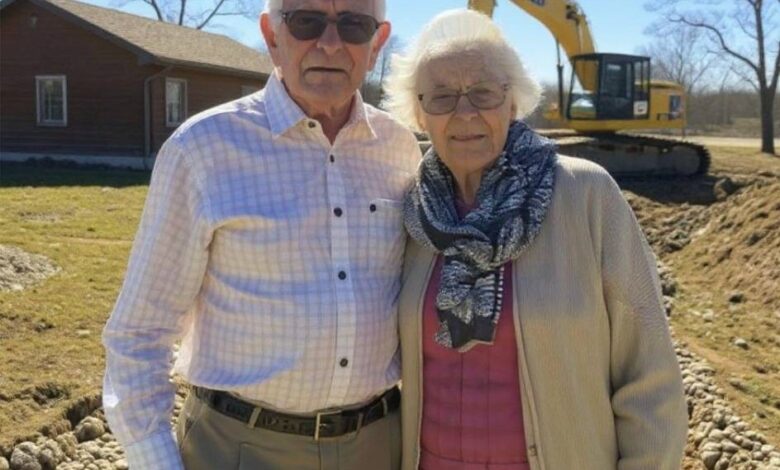
My grandparents lived on that quiet hillside for more than forty years, long enough for every tree, stone, and breeze to become part of the story of their lives. Clarence and Harriet built their world there piece by piece—an oak tree planted the year my mom was born, the wind chimes Clarence hammered out in his workshop, the stone steps Harriet swept every morning. Their home overlooked a valley that rolled out like a painting, with an empty steep lot next door that had always stayed untouched. They loved the peace of it. They’d earned it.
Then one afternoon the bulldozers arrived.
Harriet called me first. Her voice shook, but she kept it steady. “Ellis, there are machines cutting into the hill. They’re on our property.”
I tried to imagine it from memory. “Maybe they’re working near the line?”
“No. I know our markers. They’re on our land.”
She’d walked that boundary for four decades. She knew every inch of it. Still, I hoped it was a misunderstanding. Contractors, wrong GPS reading, something simple. But when Clarence returned from the doctor and drove up the hill, the truth stared back at him: a fresh scar carved right across their yard. A long, winding driveway for the lot next door. And it was clearly—obviously—on their property.
Clarence walked over to the man operating the excavator, calm as always. “Hey there. Can I see the plot map? That cut looks like it’s on our land.”
The operator wiped his forehead and shrugged. “Not my call, sir. I follow orders. You’ll have to talk to the owner.” He handed Clarence a business card with a scrawled name and number.
That night Clarence called the man—Desmond. The conversation lasted under a minute.
“This is Clarence,” he said. “Your crew dug over our line.”
A pause. Then Desmond replied, “No mistake. We checked satellite images.”
“We’ve got original property pins,” Clarence said. “Your driveway’s ten feet over.”
“If you don’t like it, sue me. I’m not moving it.”
Then he hung up.
Harriet told me later that Clarence stood there for a long time, holding the phone like it had betrayed him. She rested a hand on his arm, trying to soothe him. “It’s just land, Clarence. Let’s not start a fight.”
But it wasn’t about land. It was about disrespect—the kind that eats at you because it tells you you’re invisible.
Weeks passed. The construction crew kept working, pretending nothing was wrong. Every time Harriet looked out at the churned-up earth where she used to plant tomatoes and watch fireflies, the loss showed in her eyes. “We raised kids here,” she told me one afternoon. “That slope was our summer garden. Now a stranger digs it up like it’s worthless.”
It made me angry in a way I didn’t know how to express. Clarence and Harriet were generous people, the kind who’d give anyone a cup of sugar or a place to rest. They deserved better than this.
One day, Fletcher—my friend’s dad and an old family friend—stopped by while walking his dog. He listened, shaking his head. “I know the type,” he said. “Pushes first, thinks later.”
Later that night, after a few beers, Fletcher called Clarence with an idea. When Clarence told Harriet the plan, she laughed for the first time in weeks.
The next morning, a beat-up old F-150 sat squarely on the portion of driveway that crossed into my grandparents’ land. A handwritten note on the windshield read:
PRIVATE PROPERTY. TRESPASSERS WILL BE REPORTED.
The construction crew arrived and froze. “Who the hell parked there?” one asked.
They dialed the number on the note. Fletcher answered cheerfully. “Yep, that’s my truck. I have permission to park it there. You touch it, you’re tampering with private property. Police have been notified.”
It wasn’t a threat. It was a statement of fact.
Construction halted immediately. The foreman swore under his breath. “We can’t haul lumber up that hill. Call the owner.”
An hour later, Desmond called Clarence again.
“Move the damn truck,” he barked.
“Not my truck,” Clarence replied in that calm, unshakeable way of his. “It’s parked legally on my property.”
“You’ll regret this, old man.”
“No,” Clarence said. “The only thing I regret is not charging you for an easement the moment you broke ground.”
Another click.
Days passed. The truck stayed put. The construction site turned quiet and useless. Tow truck after tow truck arrived but left after Fletcher explained the situation. People in town heard what happened and started honking in support whenever they drove by. Neighbors waved. Even the mailman smiled when he passed the old pickup blocking the illegal driveway.
Eventually Desmond cracked.
He called Clarence yet again, voice deflated. “Fine. What do you want?”
“A legal easement contract,” Clarence said. “Fair price. In writing.”
“And the truck?”
“It moves when the check clears.”
A week later, the paperwork was signed. Desmond paid a respectable sum to legally use that ten-foot sliver of land. Fletcher removed the truck. My grandparents celebrated with pie on the porch, proud and peaceful again. Clarence donated some of the money to the local food bank. Fletcher received three cases of beer and a handwritten card Harriet decorated with flowers.
When I visited next, Desmond’s house was nearly complete. He avoided looking toward my grandparents’ porch.
“The funny thing is,” Clarence said, sipping iced tea, “if he’d asked nicely, I would’ve let him use that strip for free.”
I laughed. “Some people only learn respect the hard way.”
Harriet grinned. “And some need to meet a rusty old truck before it sinks in.”
That stolen corner of land wasn’t just dirt. It was history, memory, and dignity. And Clarence reminded me that you don’t always need anger, lawyers, or noise to defend what’s yours.
Sometimes all it takes is a friend, a stubborn principle, and one well-placed F-150.