Literally EVERYONE knows this simple hack for perfectly peeled hard-boiled eggs, How come you dont know?
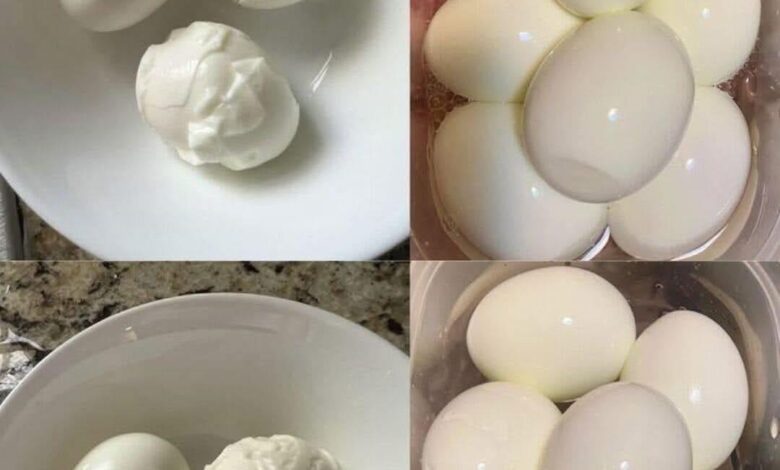
Most people boil eggs the same way every time, convinced they’ve cracked the code—until they peel one open and see that dreaded green ring hugging the yolk. It’s harmless, sure, but it makes the egg look overcooked and taste a bit off. After one too many disappointing breakfasts, I finally asked my chef friend for help. He laughed at my frustration, shook his head like I’d been living under a culinary rock, and showed me a method so simple I felt ridiculous for not knowing it sooner.
He explained that the green ring isn’t a failure—it’s chemistry. When eggs cook too long or sit in hot water after they’re done, the iron in the yolk reacts with the sulfur in the white. Heat speeds up the reaction, and the result is that pale, unappetizing halo. It doesn’t mean the egg is bad, just mistreated. The fix isn’t complicated; it’s all about timing, cooling, and a little bit of patience.
The first step is choosing the right eggs. Strangely enough, older eggs peel better than fresh ones. The air cell inside gets larger with age, making the shell easier to remove. That said, green rings don’t care how old the egg is—they show up when heat hangs around too long.
My friend told me to start with cold water, not boiling water. Place the eggs gently in a pot, add enough cold water to cover them by about an inch, and put the pot on medium-high heat. Once the water reaches a rolling boil, turn off the heat immediately and cover the pot. No simmering, no extra cooking time. Let the eggs sit in the hot water for exactly ten minutes. Not nine, not fifteen—ten. That’s the sweet spot where the whites firm up and the yolks cook through without going chalky or gray.
When the timer rings, don’t hesitate. Drain the pot immediately and plunge the eggs into ice water. The shock from hot to cold stops the cooking process instantly. This rapid cool-down prevents the iron-sulfur reaction, keeps the yolk bright yellow, and makes peeling a thousand times easier. Even if you don’t have ice, run them under cold water for a minute or two. The goal is to lower the temperature fast.
While the eggs cool, tap each one gently on the counter to crack the shell all around. Start peeling at the wider end where the air pocket sits. The shell slides off much easier when the membrane releases, and in my experience, the ice bath helps more than anything else. My chef friend insisted on rolling the egg lightly on the counter to loosen the shell—it works like magic.
He wasn’t done teaching, either. Sprinkle a bit of salt or a splash of vinegar into the boiling water next time, he said. It helps prevent cracks and keeps any leaks from spreading. And if I ever wanted restaurant-quality hard-boiled eggs—smooth whites, tender yolks, zero green rings—the ten-minute rule and ice bath were non-negotiable.
We peeled one of the eggs together, and inside was the most perfect, sunny-yellow yolk I’d ever seen in my own kitchen. No green circle. No overcooked dryness. Just a clean, beautiful result that finally made sense after years of trial and error.
I didn’t realize how many small mistakes I had been making until someone showed me how simple the process really was. I always thought great cooks did something complicated or secret. Turns out the “secret” is stopping the cooking at the right moment. Heat creates the problem; cold fixes it.
The next morning, I tried the method on my own. When I cracked the shell of the first egg, it slipped off in large pieces without a fight. The yolk was smooth, bright, and perfect. I tossed the eggs into a salad, and the difference was obvious—not just in looks, but in taste. No bitterness, no dryness, nothing chalky. Just clean, rich, boiled egg.
Since then, I haven’t had a single green ring. Not once. And every time I make a batch, I hear my friend’s voice teasing me: “How did you not know this?”
The truth is, most people don’t. Hard-boiled eggs seem so basic that no one thinks to question how they’re made. We throw them into boiling water, let them bounce around, and hope for the best. But a little care goes a long way. Boil gently, time precisely, cool instantly—that’s the whole trick.
Now, whether I’m prepping eggs for breakfast, deviled eggs for a party, or snacks for the week, they come out exactly the way they should. No green halos. No frustration. Just perfect eggs every time.
And yes—I’m still laughing at myself for not learning this sooner.