
How woman astonishingly played the clarinet during her four-hour brain surgery
A woman with Parkinson’s disease has made history by playing an instrument during a four-hour operation.
Denise Bacon, 65, was diagnosed with the debilitating condition over 10 years ago and has found that her ability to walk, swim, dance and play her clarinet have been affected as a result.
Denise, who hails from East Sussex, England, said she was ‘delighted’ with how the procedure went.
“I remember my right hand being able to move with much more ease once the stimulation was applied, and this in turn improved my ability to play the clarinet, which I was delighted with,” she said
Going on to share how she’s been since the surgery, Denise went on: “I’m already experiencing improvements in my ability to walk, and I’m keen to get back in the swimming pool, and on the dance floor to see if my abilities have improved there.”
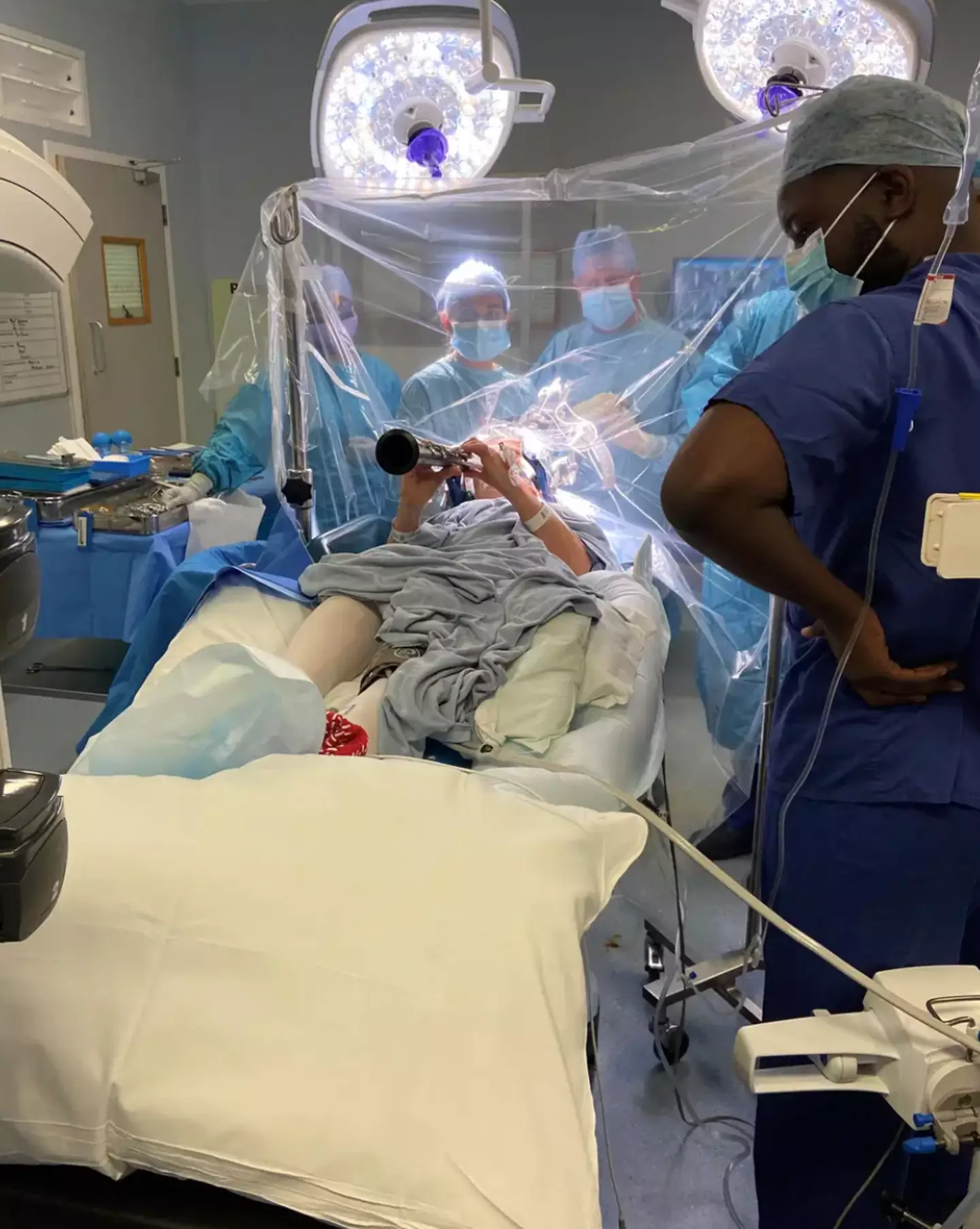
Denise Bacon played the clarinet during surgery (Karen Welsh/King’s College Hospital/PA)
The operation was carried out at King’s College Hospital by Keyoumars Ashkan, a professor of neurosurgery.
Denise’s scalp and skull were numbed so she could undergo deep brain stimulation (DBS). DBS is a surgical procedure using electrodes implanted in the brain and is suitable for some patients with disorders such as Parkinson’s, which Denise has had since 2014.
The DBS led to instant results on the operating table. Amazingly, Denise had immediate improvement in her fingers, allowing her to play the clarinet easily.
Prof Ashkan, said: “Holes half the size of a five pence piece were made in Denise’s skull after a frame with precise co-ordinates was placed on Denise’s head, acting as a sat nav to guide us to the correct positions within the brain to implant the electrode.
“Once the electrodes were in place on the left side of Denise’s brain, the current was switched on and an immediate improvement was noted in hand movements on her right side.
“The same happened on her left side when we implanted electrodes on the right side of her brain.”
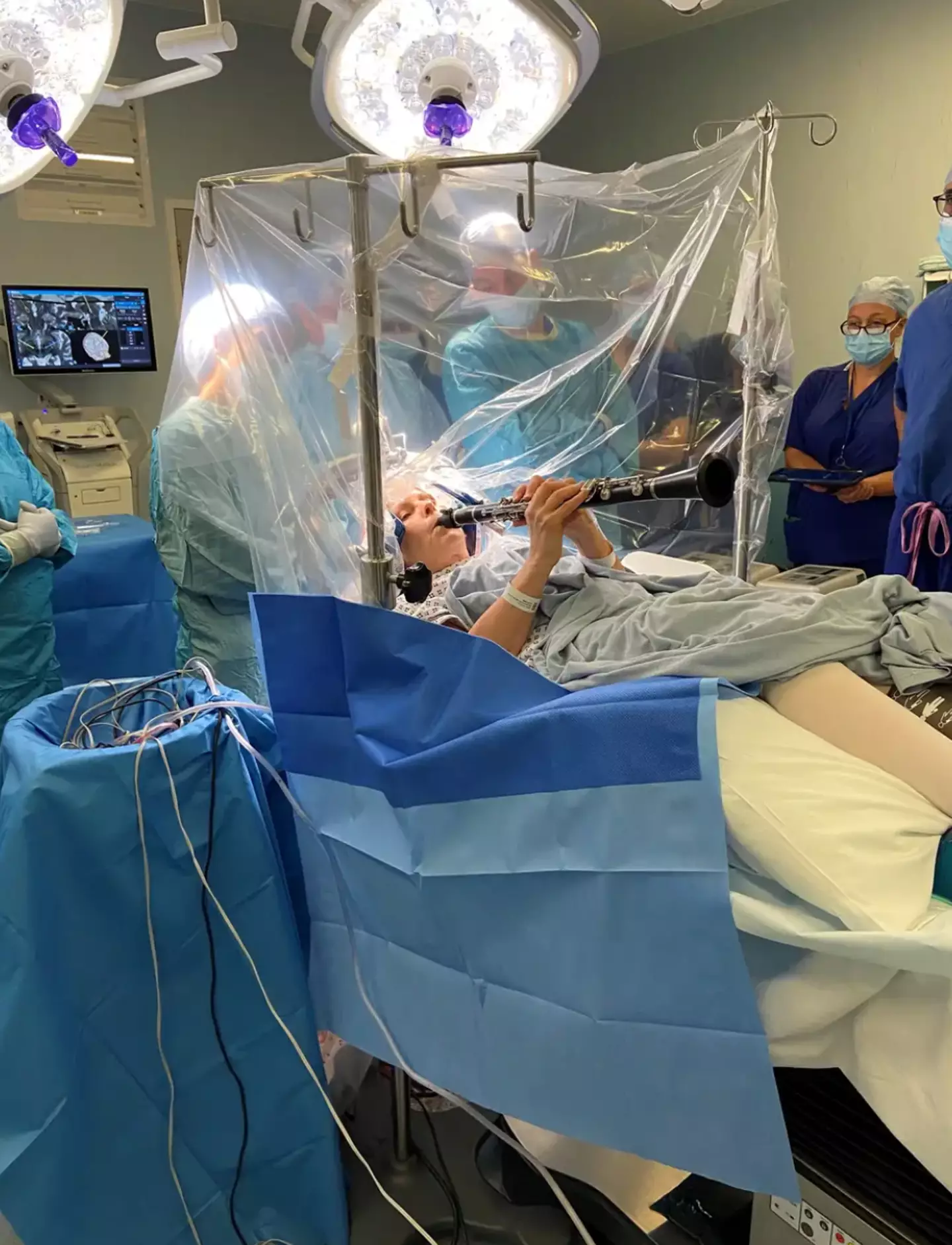
Denise had a procedure known as deep brain stimulation (Karen Welsh/King’s College Hospital)
He added: “As a keen clarinettist, it was suggested Denise bring her clarinet into the operating theatre to see whether the procedure would improve her ability to play, which was one of Denise’s main goals for the surgery.
“We were delighted to see an instant improvement in her hand movements, and therefore her ability to play, once stimulation was delivered to the brain.”
Prof Askhan went on to describe DBS as ‘one of the most effective, evidence-based and long-lasting therapies to control the motor symptoms of Parkinson’s disease, improving tremor, stiffness and slowness of movement’.
“Modern advances in DBS technology are now allowing us to personalise the therapy to the needs of our patients, with a positive impact on their quality of life,” he added.