ABOUT MICHAEL J FOX AFTER THIS!
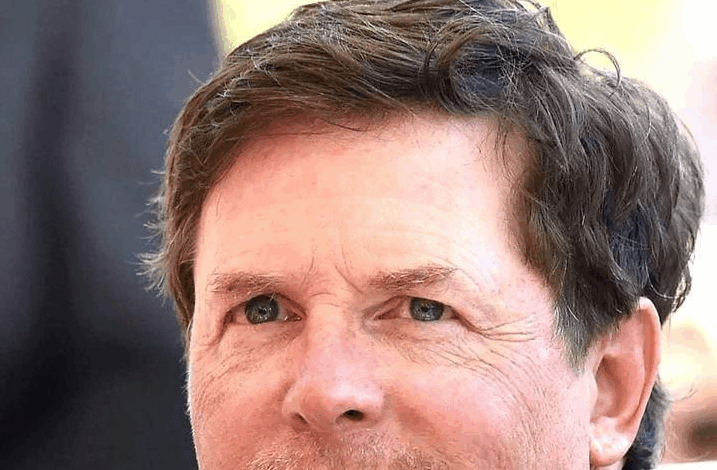
Michael J. Fox has spent more than three decades living with Parkinson’s disease, a condition that would break most people long before the halfway point. Yet at 62, he remains one of the most respected and admired figures in entertainment — not because of the roles that made him famous, but because of the strength, wit, and honesty with which he’s faced one of life’s toughest challenges.
Fox was only 29 when he was diagnosed. At the time, he was one of Hollywood’s biggest stars, riding high off Back to the Future, Family Ties, and Teen Wolf. He was young, successful, and unstoppable. Then came the diagnosis — a degenerative neurological disorder with no cure. Doctors told him he might have only ten productive years left. He didn’t talk about it publicly at first. Instead, he buried himself in work, hiding his symptoms from the cameras and audiences that adored him.
The silence didn’t last forever. As the disease progressed, keeping it secret became exhausting. Eventually, Fox decided to speak out. That choice changed his life. What could have been a slow fade into obscurity became a second act built on authenticity, humor, and purpose. In 1998, he went public with his diagnosis. A year later, he launched the Michael J. Fox Foundation for Parkinson’s Research, which has since become the world’s leading organization funding Parkinson’s science.
“I realized I had a platform, and I could either use it or waste it,” he once said. “The truth is, this disease gave my life more meaning than I ever could have imagined.”
It wasn’t easy. Fox has endured countless physical challenges — tremors, stiffness, surgeries, even broken bones from falls. But through it all, he’s maintained the sharp humor that made audiences fall in love with him decades ago. In interviews, he often jokes about his condition, disarming people who don’t know how to react. “If I fall down, I get back up,” he quipped. “It’s not graceful, but it’s me.”
Behind the humor, though, there’s grit. Fox has spoken openly about the darker side — the frustration, the fatigue, the moments when optimism doesn’t come so easily. In his 2020 documentary and memoir No Time Like the Future, he admitted there were periods when he questioned whether his trademark positivity was sustainable. “I used to think optimism was a matter of choice,” he wrote. “Now I see it’s a form of survival.”
That mindset defines him. Fox doesn’t sugarcoat what Parkinson’s does to a body, but he refuses to let it define his spirit. He says he’s learned to live in “radical acceptance” — not pretending everything’s fine, but recognizing reality and still finding a reason to move forward.
His family has been central to that. Fox often credits his wife, actress Tracy Pollan, and their four children for keeping him grounded. Their relationship — which began on the set of Family Ties — has endured the brutal test of time, fame, and illness. “Tracy’s the rock,” he’s said more than once. “She never signed up for this, but she’s handled it with grace and humor. I owe her everything.”
Professionally, Fox continued acting far longer than anyone expected. He won Emmys for his role on Spin City, made memorable guest appearances on shows like Scrubs, Rescue Me, and The Good Wife, and lent his voice to animated hits like Stuart Little. Each role came with adjustments — learning to work around tremors, fatigue, and speech changes. But he kept showing up. Not for sympathy, but because he loved the work. “Acting gives me energy,” he said. “It reminds me that I’m still part of something bigger than my condition.”
The foundation he created has raised over $2 billion to fund research and clinical trials aimed at finding better treatments — and ultimately, a cure. Scientists credit his organization for accelerating progress in Parkinson’s research more than any single entity in the world. That’s not hyperbole; his advocacy forced the medical world to move faster, to share data, to collaborate instead of compete.
Despite that progress, Fox has never pretended that hope alone fixes everything. In a 2023 interview, he acknowledged that the disease was taking a toll. “I’m not gonna lie, it’s getting harder,” he said. “I fall a lot. I break stuff. But I’m still here.” His voice cracked slightly, then he added, “It’s not about how long you live. It’s about how well you live it.”
That perspective — clear-eyed but defiant — is what people respond to. Fox’s resilience isn’t just about surviving Parkinson’s; it’s about redefining what it means to live with it. He’s turned his personal struggle into a public mission without losing the humor that made him who he is. Even now, when the physical effort of daily life can be overwhelming, he still finds joy in the small things: time with family, playing the guitar, cracking a joke, or encouraging others to keep going.
Over the years, he’s received countless honors — honorary doctorates, humanitarian awards, even recognition from medical associations for his advocacy. But he tends to shrug those off. “Awards are nice,” he once said, “but the real reward is when someone with Parkinson’s tells me they don’t feel so alone anymore.”
That’s the legacy he’s building — not just as Marty McFly or Alex P. Keaton, but as a man who faced down a relentless disease and refused to disappear. In a world obsessed with youth and perfection, Fox’s openness about vulnerability is revolutionary. He doesn’t hide the tremors. He doesn’t edit out the stumbles. He shows up anyway — honest, flawed, and brave.
As he moves through his 60s, he knows the road ahead won’t get easier. Yet his outlook hasn’t changed. “You don’t have to have a good day every day,” he says. “You just have to believe that a better one’s possible.”
Michael J. Fox has become more than an actor or advocate. He’s proof that courage isn’t the absence of fear or pain — it’s showing up in spite of it. His story isn’t about a disease. It’s about a man who keeps finding light in the dark, laughter in the struggle, and purpose in persistence.
And that, more than any award or role, is what makes him unforgettable.