She Rose To Fame Quickly But Her Sudden Death Shocked Us All!
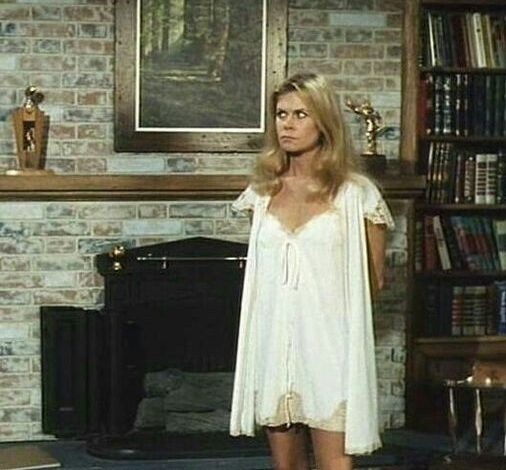
When you hear the name Elizabeth Montgomery, one image instantly comes to mind — that mischievous smile, a twitch of the nose, and a bit of magic that defined an era. For millions around the world, she’ll forever be Samantha Stephens, the charming witch from the beloved television classic Bewitched. But behind the laughter, glamour, and sparkling special effects was a woman whose talent, grace, and quiet strength made her more than just a TV icon — and whose sudden death in 1995 stunned fans and friends alike.
Elizabeth Montgomery’s story began long before Bewitched made her a household name. Born on April 15, 1933, in Los Angeles, California, she grew up surrounded by Hollywood’s bright lights. Her father, Robert Montgomery, was a respected actor and director, while her mother, Elizabeth Bryan Allen, was also an actress. Acting was practically in her DNA, but Elizabeth didn’t rely on her famous last name. From an early age, she proved that her success would come from talent, not connections.
After studying at the American Academy of Dramatic Arts in New York, Elizabeth began working in television during the early 1950s, long before the medium became the global force it is today. She first appeared on her father’s show, Robert Montgomery Presents, where she quickly impressed both audiences and critics. Her natural charisma and quiet intelligence made her stand out in an industry obsessed with glamour and perfection.
Through the 1950s and early 60s, Montgomery built an impressive résumé, appearing in dramas and stage plays. But her big break — the role that would define her forever — came in 1964, when she was cast as Samantha Stephens, the beautiful suburban witch trying to live a “normal” life with her mortal husband Darrin in Bewitched.
The show became an instant hit. It was witty, warm, and ahead of its time. Beneath its comedic surface, Bewitched subtly tackled gender roles, marriage, and identity — themes that resonated deeply with audiences, especially women. And at the center of it all was Elizabeth. Her portrayal of Samantha was magnetic — equal parts mischievous and maternal, strong and soft, powerful yet kind.
For eight years, from 1964 to 1972, Bewitched dominated television. It made Montgomery one of the most recognized faces in America and earned her multiple Emmy nominations. But what fans didn’t see on-screen was how demanding the show’s production became and how much pressure she faced as both its star and moral center.
Off-screen, Elizabeth’s life was complex. She was married four times — first to Frederick Gallatin Cammann, then to actor Gig Young, followed by director William Asher, and finally to actor Robert Foxworth. Her marriage to Asher, who directed Bewitched, produced three children — William, Robert, and Rebecca. Their partnership was creative and passionate, but also strained by Hollywood’s relentless pace and constant attention.
Despite the fame, Elizabeth Montgomery never seemed fully consumed by it. Co-stars and friends often described her as down-to-earth, funny, and surprisingly private. She avoided the party circuit and focused instead on raising her children and pursuing meaningful work. After Bewitched ended, she took on challenging roles that shattered her typecast image — portraying rape survivors, murder victims, and complex women in television dramas like A Case of Rape (1974), The Legend of Lizzie Borden (1975), and When the Circus Came to Town (1981).
Her performance in A Case of Rape was particularly groundbreaking. Airing in an era when sexual assault was rarely discussed publicly, the film forced audiences to confront the trauma and injustice victims faced. Critics hailed her bravery for taking the role, calling it one of the most important television performances of the decade.
Elizabeth also used her platform to speak out for causes she cared about. She was a vocal supporter of women’s rights, LGBTQ+ equality, and AIDS awareness — issues that few major stars of her time dared to touch. Her compassion and sense of justice mirrored the characters she portrayed: strong, empathetic women who refused to be defined by others.
By the early 1990s, Montgomery had largely stepped away from Hollywood’s spotlight, focusing on family and smaller acting projects. She was living a quieter life in Beverly Hills with her longtime partner, Robert Foxworth, and her children. To the public, she still seemed radiant and healthy — the same enchanting figure who’d made millions believe in magic.
That illusion shattered in May 1995, when shocking news broke: Elizabeth Montgomery had died suddenly at the age of 62. Fans were stunned. Many hadn’t even known she was sick.
It was later revealed that she had been battling colon cancer, a diagnosis she received just months earlier. True to her private nature, she chose to keep her illness secret, confiding only in family and a few close friends. She continued working even as the disease progressed, showing the same resilience and dignity that defined her life.
On May 18, 1995, surrounded by her husband and children at home, Elizabeth Montgomery passed away peacefully. The news spread quickly, leaving fans heartbroken. Tributes poured in from across the world. Actors, directors, and fans alike spoke of her kindness, professionalism, and timeless beauty.
Her Bewitched co-star Dick Sargent, who had also passed away just a year earlier, once said, “Elizabeth had a kind of light you couldn’t fake. It wasn’t just talent — it was soul.”
In the decades since her death, Elizabeth Montgomery’s legacy hasn’t faded. Reruns of Bewitched continue to air globally, introducing new generations to the whimsical world she created. Younger audiences who never saw the show during its original run still recognize her instantly — proof of her lasting cultural impact.
Beyond her career, what endures is her humanity. She wasn’t just an actress who played a witch — she was a woman who quietly redefined what strength and grace could look like in Hollywood.
Fans often revisit her interviews, where she spoke with wit and humility about fame, love, and purpose. In one of her last conversations, she said, “The most magical thing in life isn’t power. It’s kindness.”
Three decades after her passing, those words still resonate. Elizabeth Montgomery remains one of television’s most beloved figures — a star who rose quickly, shone brightly, and left far too soon.
Her story reminds us that even those who bring magic into our lives are still human — vulnerable, mortal, and fleeting. But like Samantha Stephens, Elizabeth Montgomery’s spirit lives on, forever twinkling in the hearts of those who grew up under her spell.
And in that sense, the magic never really ended.