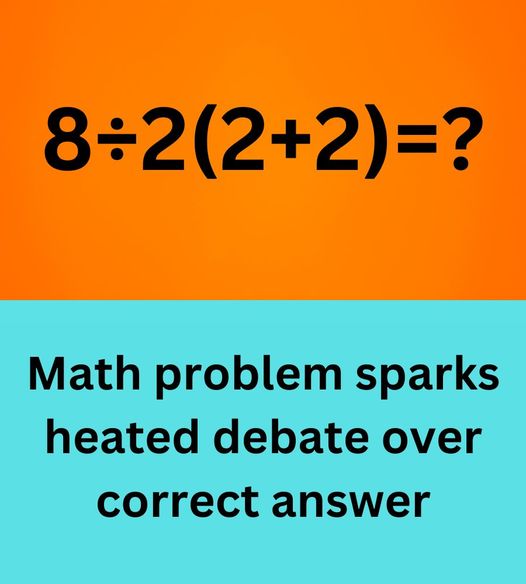
RIDDLE: This math problem ignites passionate debates about the right answer!
“The riddle in a tweet was 8 ÷ 2(2 + 2), seems simple at first glance.”

However, upon solving the problem, people discovered that there was not one, but two possible answers.

This led to a deep divide in the participants’ opinions: some continued to believe that the correct answer should be 16, while others were convinced that the correct outcome should be 1.

A heated debate arose online among mathematicians about the correct method.

Content:
The Confusion
The problem started on Twitter when a user shared the sum and challenged his followers to find the solution together.

Soon the internet was flooded with diverse responses from people around the world, causing the virtual space to nearly burst at the seams with passion and debate.

But how could a simple comparison start such a heated debate?

To solve the problem it is necessary to understand the basic rule of mathematics known as the order of operations.
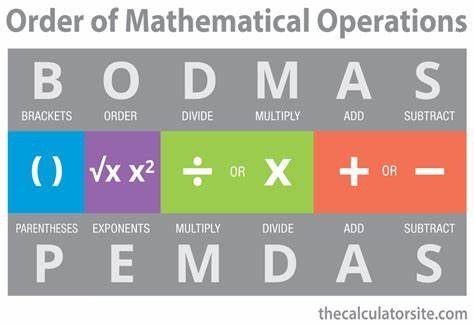
The PEMDAS rule is essential for correctly solving mathematical equations and understanding the correct order of operations.
- “brackets”
- E: Exponents (Exponents)
- MD: Multiplication and Division
- AS stands for Deduction and Addition in Dutch, which means that it includes both the subtraction and addition of numbers.
According to this rule, the operations inside the parentheses should be solved first, followed by exponents, then multiplication and division from left to right, and finally addition and subtraction in the same way.
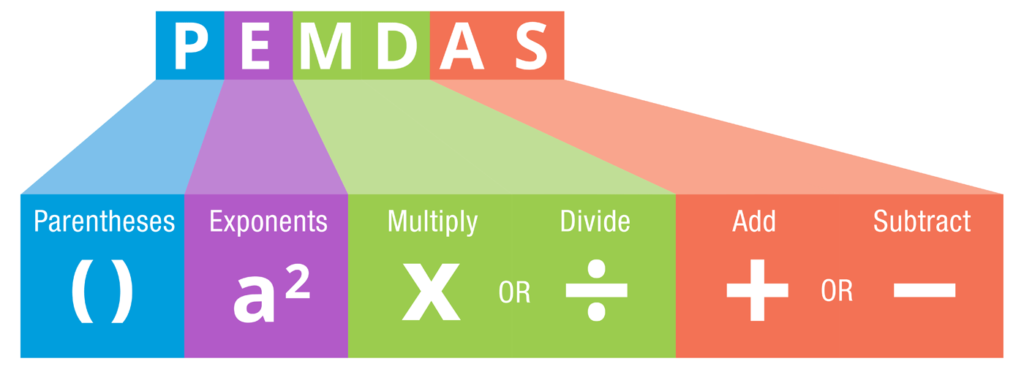
When tackling the math problem, it is important to keep this rule in mind:
- First calculate the sum inside the brackets. This gives us: 8 ÷ 2(4).
- Next, we divide 8 by 2 and multiply the result obtained by 4, which finally gives the number 16.
According to these steps, the correct answer to the problem should be 16, but as with many math problems, there is an alternative approach that can lead to a completely different result, making it important to carefully consider which method will be most accurate and effective in any particular situation.
An Alternative Interpretation
The alternative approach to the problem follows a different logic, where the equation is first multiplied by the number before it. This results in the following interpretation:
8 ÷ [2(4)].
In this case, the notation in parentheses is treated as a unit and the part in parentheses must be solved first. This changes the equation to:
“8 ÷ 8 = 1.”
These differences in interpretation of the order of operations lead to this method of solution, in which multiplication outside the parentheses takes precedence over division.
This leads to two different points of view: some people are convinced that the answer is 16, while others insist that the correct answer is 1.
The Role of Conventions
The discussion of this problem shows that although mathematics presents itself as an objective and exact science, it is in reality also heavily dependent on human conventions, interpretations and contexts.
According to Mike Breen of the American Mathematical Society, the correct answer to question 16 is, according to the order of operations PEMDAS.

However, he noted that the equation is ambiguous as it is currently written and allows for different interpretations, making it difficult to draw a definitive conclusion about its meaning.
In the abstract world of mathematics, where precision and logic are central, situations can arise in which ambiguities arise. Despite the efforts of mathematicians to use clear rules and definitions, it is still conceivable that there are multiple possible interpretations for certain concepts or problems.
“Breen explained that while the conventional answer is 16, he wouldn’t immediately correct someone who says the answer is 1.”
The ambiguity in mathematics is reminiscent of conventions of language and culture.
“Comparisons can have different meanings depending on the context.”
This was emphasized by Rhett Allain, a physics professor at Southeastern Louisiana University.
He thought the problem could better be written as 8 divided by (2 multiplied by (2 plus 2)), which would probably give a result of 1.
“Conventions are essential,” Allain emphasized. “We have rules and agreements for recording and understanding information, just as we have agreements about spelling.”
Even in language there are variations, such as the difference between ‘gray’ and ‘grey’, but we still understand the meaning.
Even in language, variations such as ‘gray’ and ‘grey’ are possible, but we still understand the meaning.
What Can We Learn From This?
“The viral math problem shows that simple sums can be confusing and controversial when presented unclearly.”
Mathematics has clear rules, but interpretation is possible.
This can lead to frustration and interesting discussions about mathematical conventions in our everyday lives.
Clear notation is essential in mathematics, just as language is sometimes ambiguous.
“Clear communication and following conventions are important to avoid misunderstandings.”
Keypoints:
- “The math problem 8 ÷ 2(2 + 2) caused a divide online with answers ranging from 16 to 1.”
- According to the PEMDAS rule, the answer is 16, because the sum within the parentheses must be solved first and then the division must be performed from left to right.
- An alternative interpretation is that the answer is “1” when 8 is divided by 2 multiplied by 4.
- Mike Breen and other mathematicians found the question ambiguous and open to various interpretations.
- It is important to use clear mathematical notation to avoid confusion.
SHARE NOW : RIDDLE: This math problem ignites passionate debates about the right answer!