My Wife Vanished When Our Daughter Was 3 Months Old – Five Years Later, We Saw Her on TV!
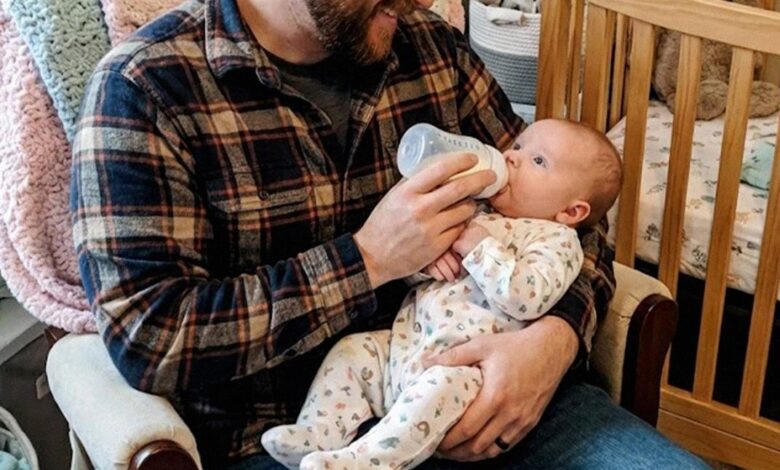
The first thing that felt wrong was the quiet.
Maisie was only three months old then, still waking through the night, still filling our small house with soft cries and restless sounds. Silence at that hour wasn’t peaceful. It was alarming. I opened my eyes and instinctively reached for my wife, but Erin’s side of the bed was cold and empty.
I told myself she was probably already up with the baby. Erin had always been an early riser, moving through the house before dawn, making coffee, folding laundry, trying to stay ahead of a life that had changed faster than either of us expected. I pushed myself out of bed and crossed the hallway, the floor cold under my feet, my body still heavy with sleep.
Maisie was in her crib, tucked snugly beneath her blanket, cheeks flushed with warmth. Her breathing was steady. She was safe. She was holding something, though—a sleeve of Erin’s favorite gray hoodie, twisted tightly in her tiny fist. That hoodie had followed Erin through two winters, pregnancy cravings, late-night feedings. I noticed the drawstring was missing, torn clean from one side, the edge frayed. I registered it vaguely, without understanding why it mattered.
Relief came first. Then confusion.
The clock read 6:14 a.m. Erin should have been in the kitchen by now. I waited for the familiar sounds—the coffee pot clicking on, the quiet hum of movement. Nothing came.
The kitchen was untouched. The coffee pot cold. Erin’s phone lay on the counter, still charging. And there, in the small ceramic dish by the sink, was her wedding ring.
She never took it off unless she was washing dishes. And she always put it back on.
There was no note. No message. No explanation. My wife hadn’t stormed out. She hadn’t left signs of panic or haste. She had simply vanished, leaving behind a ring, a phone, and a baby asleep in her crib.
The days that followed blurred together. I called hospitals, friends, family. I drove to her mother’s house even though they hadn’t spoken in months. I left voicemails I never heard returned. At night, I sat awake, watching the driveway, convinced Erin would come back, exhausted and apologetic, saying she’d needed air, space, anything.
She never did.
People filled the silence with assumptions. Postpartum depression. Fear. Weakness. Some spoke gently, others less so. My own mother suggested I must have missed signs, as if Erin’s disappearance was a failure I hadn’t noticed in time. I stopped inviting people over. I stopped explaining.
I kept Erin’s things where they were. I didn’t erase her from our home or our daughter’s life. And when Maisie grew old enough to ask questions, I told her the only truth I had.
Her mother didn’t go to heaven. She left. And it wasn’t because of her.
That truth sat between us for years.
Maisie was five when everything broke open again. We were folding laundry one evening, the TV murmuring in the background. She froze mid-bite of an apple slice and pointed at the screen.
“Daddy,” she whispered. “That’s Mommy.”
The woman on the TV was older, thinner, but unmistakably Erin. Standing under studio lights, performing a song about motherhood and rebirth. Then she looked straight into the camera and spoke our names.
She said she’d been drowning. That she left because she was afraid of becoming someone bitter, someone her daughter wouldn’t recognize. She said she’d spent five years trying to find herself and wanted a chance to find her way back.
She held up a frayed gray drawstring.
The same one Maisie clutched as a baby.
Thirty minutes later, my phone buzzed. One message. An unknown number. She was outside.
Erin stood on the porch, arms folded tight, a rental car idling behind her like an escape she wasn’t sure she deserved. Maisie hovered behind me, barefoot and cautious. Erin knelt, voice trembling, eyes full. She told our daughter she’d missed her. That she was real.
I didn’t move. I didn’t know how.
Erin didn’t make excuses. She didn’t defend herself. She said she had been diagnosed with postpartum depression, that she had gotten help, therapy, learned how to breathe again. She said she never stopped caring. That she sent money through my mother. That she watched Maisie from afar, too afraid to come closer.
Pieces clicked together painfully. The extra groceries. The ballet lessons we somehow afforded. The quiet help I never questioned.
I didn’t forgive her that night. I didn’t shut the door either.
I told her she could see Maisie—on my terms. Supervised. Slowly. Because for five years, I had been the one who stayed. The one who learned how to be enough.
She accepted that without protest.
When she left that night, the house didn’t return to silence. Maisie stirred in her sleep. The walls felt different, stretched between past and possibility.
Some absences never disappear completely. Some returns don’t fix what was broken. But sometimes, the quiet that once meant loss begins to carry something else.
Not certainty. Not forgiveness.
But the fragile sound of a door left open just enough for truth to step through.